

Straining to urinate, a weak stream, or feeling like you can never fully empty your bladder—these are classic warning signs of urinary obstruction. In men over 50, the most common culprit is an enlarged prostate (BPH), but several other conditions can also cause blockage.
Common Causes of Urinary Obstruction
- Benign Prostatic Hyperplasia (BPH) — most common in men over 50
- Urethral stricture — scarring narrowing the urethra
- Bladder stones — blocking the bladder outlet
- Prostate cancer — advanced stage involvement
- Neurogenic bladder — nerve dysfunction affecting bladder control
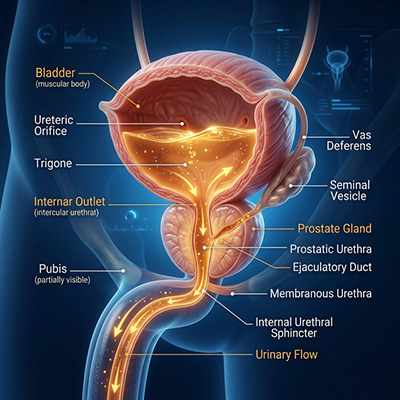
Modern non-surgical treatment for urinary issues
Non-Surgical Solutions for BPH
For BPH-related obstruction, two minimally invasive therapies have transformed care: ReZUM Water Vapor Therapy and UroLift. Both can be performed under local anesthesia, preserve sexual function, and allow patients to return home the same day.
"Don't wait until you can't urinate at all. Early treatment of urinary obstruction prevents permanent bladder damage and kidney complications."
When to See a Urologist Immediately:
- Complete inability to urinate (urinary retention)
- Blood in urine combined with difficulty urinating
- Painful urination with fever (possible infection)
- Symptoms worsening over weeks