
Peyronie's Disease Treatment Pattaya | Expert Urologist
Comprehensive Peyronie's Disease treatment: Correct penile curvature, relieve pain, and restore confidence. Board-certified urologist in Pattaya, Thailand.

What is Peyronie's Disease?
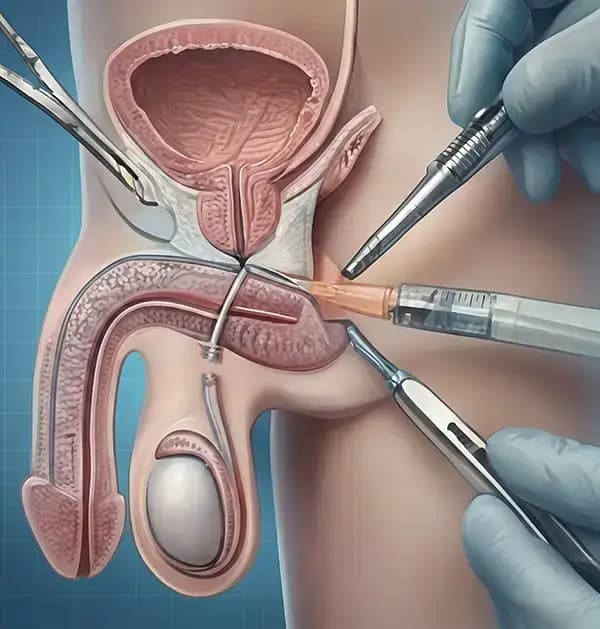
Peyronie's Disease is a connective tissue disorder in which fibrous scar tissue (plaque) forms inside the tunica albuginea—the tough sheath surrounding the erectile chambers of the penis. This plaque causes the penis to bend or curve abnormally during erection, often accompanied by pain, shortening, and erectile dysfunction. The condition affects an estimated 3–9% of adult men worldwide and can significantly impact sexual function and psychological well-being.
Clinical Mechanism
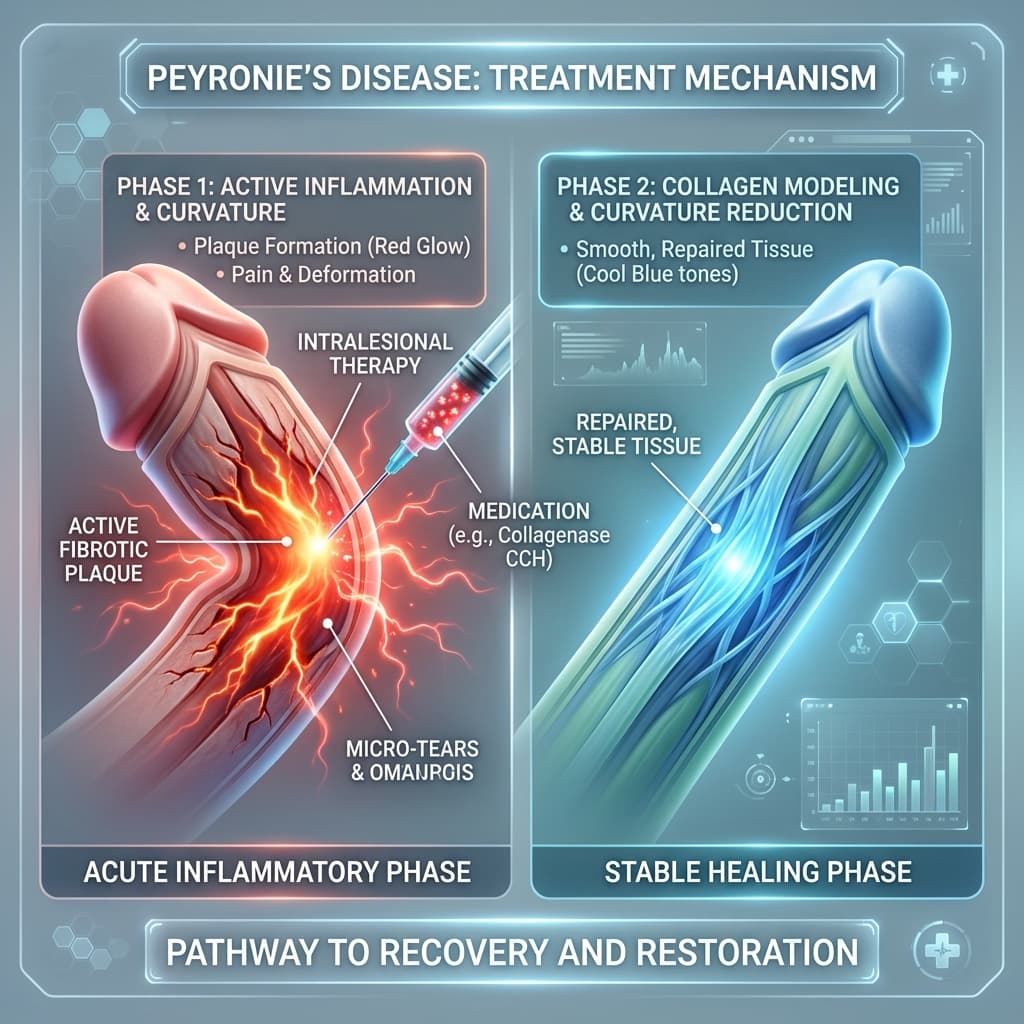
Phase 1: Acute (Inflammatory) Phase — 6 to 18 Months
During this phase, the plaque is actively forming and evolving. Patients typically experience:
- Pain during erection that may gradually subside
- Progressive curvature that worsens over weeks or months
- Palpable plaque that feels like a hard lump under the skin
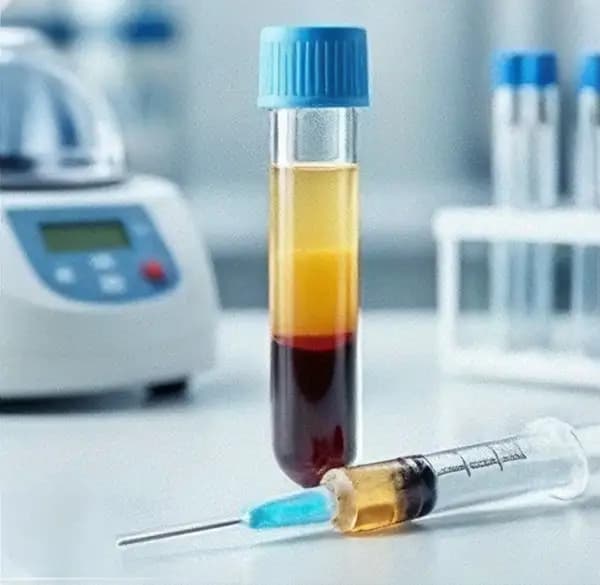
Treatment in this phase focuses on halting plaque progression and managing symptoms through non-surgical methods such as Low-Intensity Shockwave Therapy (Li-ESWT), PRP injections, oral medications (Pentoxifylline, Vitamin E), and penile traction therapy.
Phase 2: Chronic (Stable) Phase
Once the plaque has matured and the curvature has stabilized (no change for 3+ months):
- Pain typically resolves, but curvature persists
- Erectile dysfunction may develop or worsen
- Penile shortening becomes apparent
Treatment in this phase may include surgical correction for significant curvature (>30°) that interferes with intercourse. Surgical options include:
1. Plication (Nesbit procedure): Sutures on the opposite side to straighten the penis
2. Plaque incision/excision with grafting: For severe curvature (>60°)
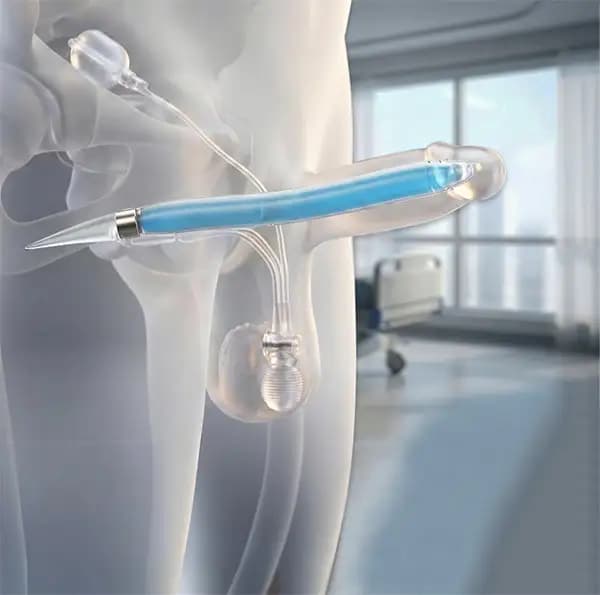
3. Penile implant: For patients with concurrent severe ED
Treatment Procedure
Consultation & Diagnosis
Comprehensive history, physical exam, and duplex Doppler ultrasound to map plaque location and curvature degree.
Treatment Plan
Personalized plan based on disease phase—non-surgical therapies for acute phase, surgical options for stable phase.
Treatment Sessions
Shockwave therapy, PRP injections, or surgical correction performed by board-certified urologist.
Follow-Up & Recovery
Regular monitoring of curvature improvement. Most patients see significant results within 3-6 months.
Safety & Side Effects
Non-surgical treatments (Shockwave, PRP) are extremely safe with minimal side effects—mild soreness or bruising at the treatment site that resolves within 24-48 hours. Surgical procedures carry standard surgical risks including temporary numbness, shortening, or changes in sensation, which are discussed in detail during consultation.
Suitable Candidates
- Men with penile curvature causing difficulty during intercourse.
- Patients experiencing pain during erections due to plaque formation.
- Men with Peyronie's-related erectile dysfunction.
- Patients in either the acute or chronic phase of the disease.
Treatment Journey
Assessment
Comprehensive evaluation including duplex ultrasound to measure curvature degree and plaque location.
Active Treatment
Non-surgical therapies begin: Shockwave, PRP, medications. Gradual improvement in pain and plaque softening.
Optimal Results
Maximum curvature correction achieved. Surgical options evaluated if needed for stable-phase patients.
Frequently Asked Questions
QIs Peyronie's Disease common?
Yes. Studies suggest it affects 3–9% of men, though the actual number may be higher as many men do not seek treatment due to embarrassment. It is most common in men aged 40–70 but can occur at any age.
QCan Peyronie's Disease be cured without surgery?
In the acute phase, non-surgical treatments like Shockwave therapy, PRP injections, and oral medications can significantly reduce plaque, pain, and curvature. Early intervention yields the best outcomes.
QWhen is surgery recommended?
Surgery is considered when the curvature has been stable for at least 3 months, exceeds 30 degrees, and prevents satisfactory sexual intercourse. Your urologist will discuss all options during consultation.
QDoes Peyronie's Disease cause erectile dysfunction?
Yes, approximately 50% of men with Peyronie's Disease also experience ED. This can be due to the plaque itself restricting blood flow, or psychological factors. Both conditions can be treated simultaneously.
Ready to Start?
Consult with our Board-certified specialists at M-Trust Urology for Peyronie's Disease Treatment Pattaya | Expert Urologist.